
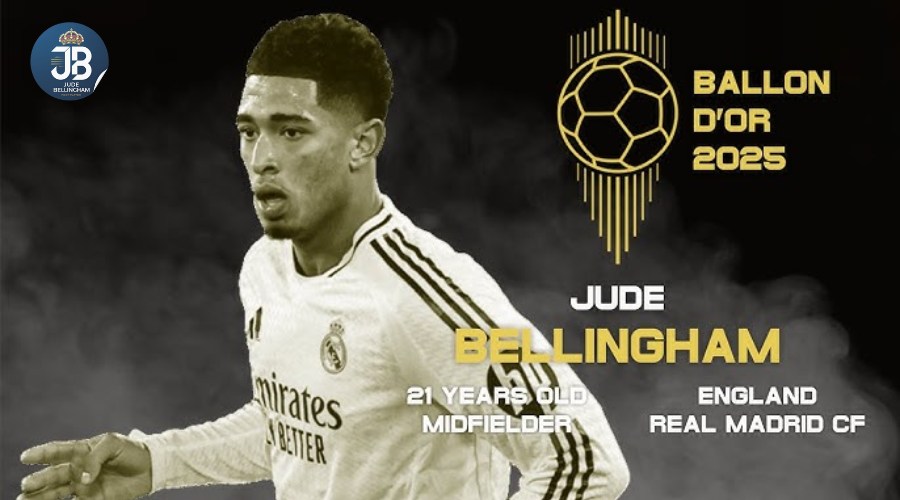
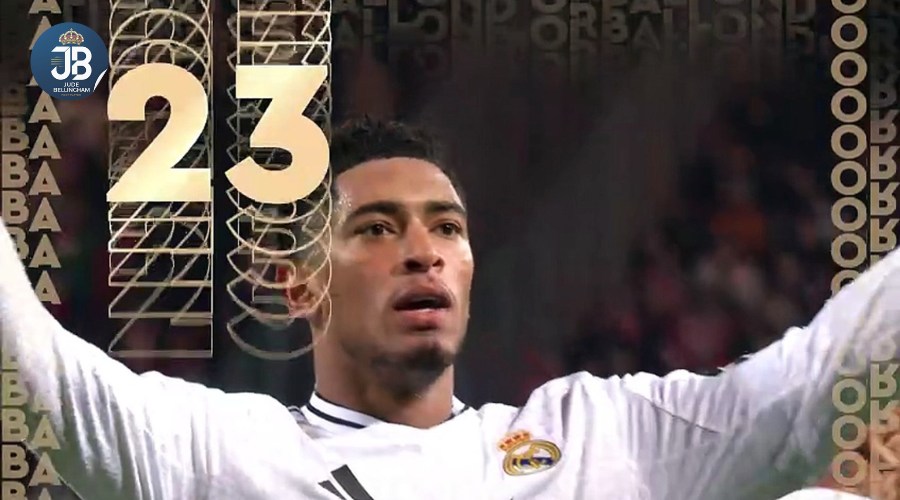
Jude Bellingham Ballon d’Or 2025 surprised many fans and analysts when the Real Madrid midfielder finished 23rd in the final rankings. After a standout season filled with goals, leadership, and global attention, expectations were significantly higher. Understanding why he landed outside the top 20 requires looking beyond raw talent—toward competition, team context, and the shifting criteria that define modern Ballon d’Or voting.
Why the young midfielder became part of the discussion
Bellingham cemented his status among the global elite immediately after his transfer to Spain, transforming from a promising talent into a genuine superstar. His ability to decide matches single-handedly during his debut season created a lingering aura of excellence that carried over into the 2024–2025 campaign. Fans and pundits alike continued to view him as a default contender for individual honors, expecting him to be a permanent fixture in the top ten regardless of the team’s fluctuating form.
Media interest leading up to the ranking release
The weeks preceding the ceremony saw intense speculation regarding where the midfielder would land after a season that was solid but less statistically anomalous than his first. Major sports outlets debated whether his deeper tactical role would be appreciated by the voters or if the lack of headline-grabbing goal numbers would hurt his standing. This period of scrutiny intensified the focus on the Jude Bellingham Ballon d’Or conversation, proving that even in a quieter year, he remains a protagonist in football media.
Context behind the “Jude Bellingham Ballon d’Or” narrative
The narrative driving his candidacy this year shifted from “goal-scoring phenomenon” to “midfield orchestrator.” While the previous campaign was defined by late winners and record-breaking stats, the 2025 discussion centered on his maturity and adaptability. However, this shift often struggles to gain traction in award formats that historically favor forwards, which added a layer of complexity to the Jude Bellingham Ballon d’Or discourse leading up to the gala.
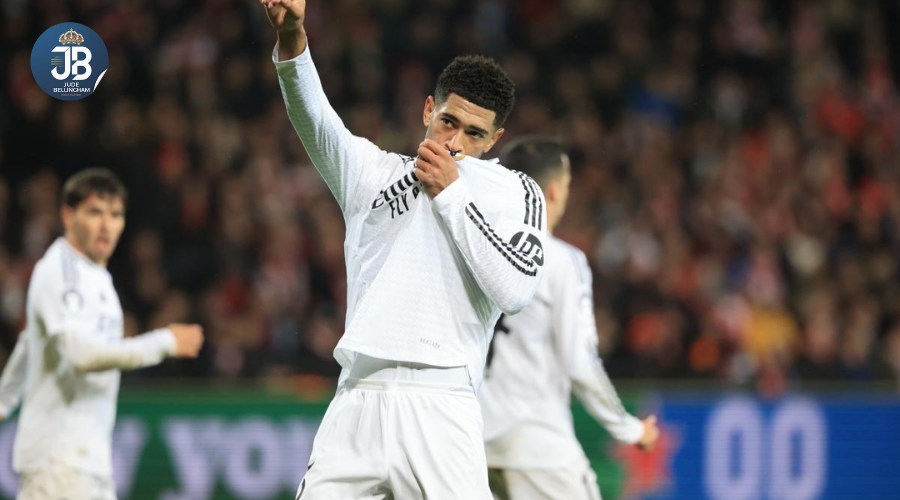
Jude Bellingham’s 2024–2025 Season in Review
To understand the ranking, one must analyze the specifics of a season that was defined more by collective integration than individual stardom.
Key Performances for Real Madrid
The midfielder continued to be a vital cog in Carlo Ancelotti’s machine, delivering performances that were crucial for the team’s structural integrity.
Key contributions during the campaign included the following aspects:
- He registered double figures in both goals and assists across all competitions, maintaining a high level of output even if it did not match the stratospheric numbers of 2024.
- His influence in El Clásico and high-stakes Champions League group stage matches remained palpable, often controlling the tempo against top-tier opposition.
- The connection with the forward line evolved, as he focused more on pre-assists and ball progression rather than finishing moves inside the six-yard box.
Tactical Role and Evolution
Ancelotti’s tactical adjustments saw Bellingham dropping deeper to accommodate the arrival of new attacking talents at the Bernabéu. This evolution meant he was often the player initiating attacks rather than the one concluding them. While this shift showcased his completeness as a footballer, it inevitably reduced the frequency of his name appearing on the scoresheet, a metric that heavily influences the casual observer and some voters.
Consistency and Decision-Making Across the Campaign
Throughout the season, Bellingham displayed a level of maturity rare for his age, prioritizing the team’s balance over personal glory. There were stretches of immense stability where he was arguably Madrid’s most consistent performer, rarely losing possession and winning crucial duels. However, the absence of a sustained “purple patch” of goal-scoring form likely impacted the Jude Bellingham Ballon d’Or prospects in the eyes of international jurors who look for peak viral moments.
How Ballon d’Or Voting Works — And What It Means for Bellingham
The mechanics of the voting process play a significant role in determining the final hierarchy of the nominees.
Ranking Criteria Used by Journalists
Journalists from the top 100 FIFA-ranked nations cast their votes based on three primary criteria: individual performance, team achievements, and fair play/class. The emphasis on “decisive” moments often skews the voting toward attackers who score goals in finals or semi-finals. For a midfielder whose role became more preparatory, scoring high in the “individual performance” category becomes significantly harder without an abundance of goals.
Importance of Team Achievements
Collective trophies are often the tiebreaker or the amplifier for any Ballon d’Or campaign. In seasons where a club dominates Europe or a national team wins a major tournament, their key players naturally rise to the top. Conversely, a season without the Champions League trophy or a major international title leaves candidates vulnerable to sliding down the rankings.
How These Factors Applied to Jude Bellingham Ballon d’Or Consideration
The application of these strict criteria resulted in a lower score for the Englishman compared to his debut season. Without a Champions League title or a Golden Boot to bolster his resume in 2025, the Jude Bellingham Ballon d’Or consideration relied heavily on his general play, which, while excellent, often loses out to rivals who lifted major silverware or broke goal-scoring records.
Why Jude Bellingham Finished 23rd in the Ballon d’Or Rankings
Several specific factors conspired to place him outside the top 20, marking a distinct contrast to his previous podium finish.
Early-Season Strength, Late-Season Competition
The 2024–2025 season began brightly for Bellingham, but the momentum slowed as the campaign reached its climax. In contrast, other contenders peaked during the spring months when the most critical matches were played. This timing bias is common in voting, as recent memories often hold more sway than performances delivered in the previous autumn.
The Impact of Other High-Performing Candidates
The competition for the top spots was fiercer than ever, with emergence of new stars and the resurgence of established veterans.
- Forwards from the Premier League and Bundesliga posted record-breaking numbers that demanded high rankings.
- Teammates within Real Madrid, particularly the strikers, cannibalized some of the votes that might have previously gone to Bellingham.
- International tournaments in 2025 brought other midfielders into the spotlight, diluting the focus that was previously centered on the Jude Bellingham Ballon d’Or narrative.
Timing of Performances Relative to Voting Windows
The voting period covers the full season, but impactful moments in April and May carry disproportionate weight. Bellingham’s most dominant displays occurred during the league phase, whereas his influence in the knockout stages, while solid, was less headline-grabbing than the previous year. This quiet conclusion to the season was a decisive factor affecting the Jude Bellingham Ballon d’Or campaign.
How the Media Reacted to Jude Bellingham Ballon d’Or Placement
The announcement of the 23rd place sparked varied reactions across the European football landscape.
Spanish Media Perspective
In Spain, the reaction was measured but protective, focusing on his tactical sacrifice for the team. Madrid-based outlets emphasized that his lower ranking was a result of his selflessness in midfield rather than a drop in ability. They argued that the voting system fails to appreciate the nuanced role of a modern playmaker who operates between the lines.
English Press Reaction
The British media expressed more surprise, viewing the drop as harsh given his consistent quality. National journalists provided the following evaluations:
- Many columnists felt that dropping from the top 3 to 23rd was an overcorrection by the voters.
- There was a sense that the “new toy syndrome” had worn off, and voters were looking for fresh narratives.
- Pundits used the ranking to reignite the debate about English players being judged more critically abroad, evaluating the Jude Bellingham Ballon d’Or standing as a snub.
International Opinions and Neutral Assessments
Neutrals largely saw the ranking as a fair reflection of a “human” season after a year of superhuman exploits. International voters and commentators pointed out that 23rd in the world is still an elite position, signifying that he remains among the very best despite not being the central protagonist of the season.
What a 23rd-Place Finish Means for Jude Bellingham Ballon d’Or Trajectory
This placement is not a setback but rather a normalization of his career path as he settles into the elite tier of football.
Historical Comparison With Other Young Nominees
History shows that many future winners experienced similar fluctuations in their rankings during their early twenties. Legends like Zidane, Iniesta, and Modric often found themselves outside the top 10 in years where their teams did not conquer Europe, only to bounce back when collective success returned. This context suggests that the current Jude Bellingham Ballon d’Or trajectory is following a natural curve of development.
English Players’ Past Ballon d’Or Results
English players have historically had a complex relationship with the award, often struggling to maintain high rankings consecutively without major international success. Bellingham is bucking the trend by remaining on the list entirely, establishing himself as a permanent fixture where predecessors might have dropped off completely after a quiet year.
What His Placement Says About His Current Standing in World Football
Being ranked 23rd confirms that Bellingham is viewed as a world-class staple, respected enough to be shortlisted even in a less flamboyant season. It places him firmly in the bracket of elite midfielders who are judged on consistency. The placement serves as a reminder that the context of the Jude Bellingham Ballon d’Or history is still being written, and this chapter represents stability rather than regression.
The Significance for His Future Development
This ranking offers valuable lessons and motivation for the next phase of his career at the Santiago Bernabéu.
Recognition at an Early Stage of His Career
At his age, merely being nominated for consecutive years is a testament to his incredible standard. The 23rd place is a badge of honor that recognizes his continued relevance at the absolute highest level. It reinforces the idea that he is not a “one-season wonder” but a perennial contender who will be in the mix for the next decade.
Validation of His Growth at Real Madrid
The ranking validates his successful transition into a more disciplined, team-oriented role. While it yielded fewer personal accolades this year, it has made him a more complete player. The voters’ recognition, even at 23rd, acknowledges that he is integral to one of the world’s biggest clubs.
Motivation for Future Seasons Without Speculation
Freed from the immense pressure of being the frontrunner, Bellingham can focus purely on his football. The absence of intense speculation regarding a potential win allows him to develop without the weight of expectation that defined his first year. This “underdog” status might prove to be the perfect catalyst for the future of the Jude Bellingham Ballon d’Or journey, driving him to reach new heights in the campaigns to come.
Conclusion
Jude Bellingham’s 23rd-place finish in the 2025 Ballon d’Or rankings is a reflection of a football landscape that is constantly evolving. It marks a transition from his explosive arrival to a period of sustained excellence and tactical maturity. Far from being a disappointment, this ranking solidifies his status as a mainstay of world football, offering a platform for future success as he continues to evolve at Real Madrid.
